
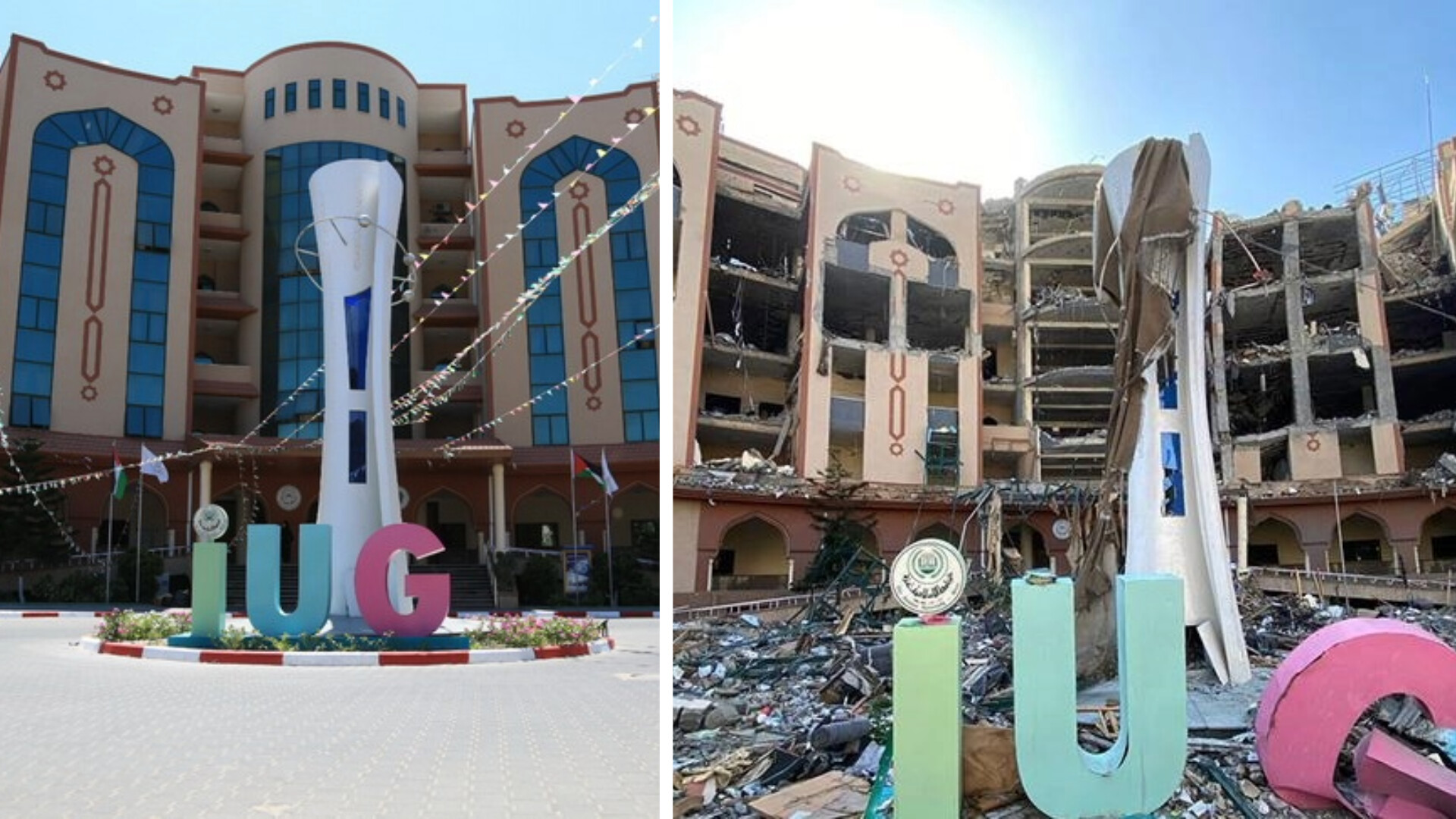
Israel’s genocide in Gaza, the crime of crimes that obligates states to intervene, has taken the lives of large numbers of Palestinian scholars. Many were accomplished academics with long histories of achievement: Sufyan Tayeh was a renowned physicist and president of the Islamic University in Gaza. He held a doctorate in theoretical physics and applied mathematics and, in recognition of his research contributions, had been appointed holder of the UNESCO Chair for Physical, Astrophysical, and Space Sciences in Palestine in March 2023. Others were well embarked on promising academic careers: Khaled al-Ramlawi, a professor of engineering at the Islamic University, received his doctorate in 2021 in Türkiye, and had chosen to bring his expertise in water management back to Gaza. And some were just getting their start in the academy: Rola Abdul Jawad held an appointment in the Department of Computer Engineering at Gaza University and offered courses in multimedia studies at several other universities in Gaza as she continued to develop her own career as a graphic designer. She was killed at age 29.
This archive is produced by a group of academics to honor and commemorate these lives and those of the many other teachers and researchers in higher education murdered in Gaza during the genocide perpetrated by Israel and its patrons, especially the United States. They were members of the global intellectual community, and we are all impoverished by the loss of their contributions that would have enriched the worlds of the humanities and sciences. The liquidation of these colleagues squandered the many years of higher education and training they embodied, often acquired with great personal and collective effort. The death of so many of our colleagues is a massive blow to higher education in Palestine: they were the teachers of the rising generation who were to take their places as the writers, theologians, social scientists, engineers, and doctors who would help to weave the social fabric and develop the world of knowledge in Palestine. We record their lives in a spirit of grief for their loss and admiration for their accomplishments and to demand that their killers face accountability for their crimes.
We are not alone in this mission. A number of organizations have recorded and lamented the murder of colleagues in their respective fields. The Committee to Protect Journalists, Pen International, Doctors Without Borders, and National Nurses United are among those that have called attention to targeted killings of their fellow professionals. A handful of academic organizations and societies have similarly called out the murder of scholars, including the British Society for Middle Eastern Studies and the Middle East Studies Association. Yet, many other major academic associations, learned societies, and scholarly journals in the sciences, social sciences, and humanities, especially those in the United States, have remained silent. This is more than regrettable. Justice, intellectual integrity and human solidarity all should impel them to voice their protest.
We have been humbled and moved by the stories of our slain colleagues. Many of them, educated abroad, made the conscious choice to return to Gaza despite the daunting challenges of the long blockade imposed by Israel since 2007. They taught large numbers of students, and they managed to continue their academic research in a context of isolation, shortages of basic supplies, regular power outages, and episodes of deadly military bombardment over many years. They helped to build Gaza’s institutions of higher education as teachers, researchers, and administrators with single-minded dedication, and as a result Gaza has one of the top percentages of higher degree holders in the world. They had rich family lives and many of them died alongside their parents, their siblings, and their children. Their surviving relatives, colleagues, and former students miss them and mourn them deeply, as reflected in the many memorial tributes they have posted. These brief biographies are a modest attempt to convey a sense of what their families, their communities, Palestine, and all of us have lost.
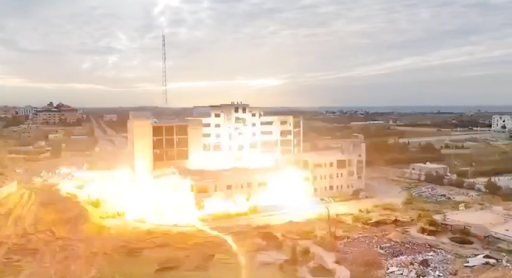
The genocide in Gaza has been characterized, in part, as “scholasticide,” in reference to the systematic attack on education in which Israel has destroyed educational infrastructure, including Gaza’s 12 universities and their affiliated colleges as well as seven other institutions of higher education – 19 institutions in all. More than 57 university buildings, including classrooms, labs, libraries, and museums, had been flattened as of 25 March 2025, some of them by aerial bombardment and others by controlled demolitions after they had been in use by the Israeli military as barracks, storage facilities, or interrogation centers.
On 17 January 2024, for example, after occupying the campus of al-Israa University since early November of 2023, Israeli military forces detonated hundreds of landmines inside the university, destroying the last standing university in Gaza. Al-Israa’s graduate and undergraduate colleges, training hospital, science labs, media training studios, mosque, and national museum containing 3,000 rare artifacts were all obliterated. Israeli soldiers involved in these acts of destruction filmed themselves dancing and joking in celebration of their hideous deed. The liquidation of faculty members and the destruction of the universities cannot be understood separately from Israel’s colonial settler quest to erase the Palestinian presence in the country.
Some 87,000 students have suffered a near total disruption of their studies for the duration of the genocide, and more than 1200 have been killed. Upwards of 200 academic staff have perished, many in targeted attacks. Many more were injured and virtually every faculty member and student has been displaced, often multiple times. We note that these numbers will no doubt increase substantially when more people are recovered from under the rubble and the many who died from the dearth of medicines and medical treatment can be recorded.
In the face of this campaign of ruination, university administrators, faculty, and staff in Gaza have made heroic efforts to revive and sustain teaching and research, to carry on the work of the many colleagues they have lost. In May of 2024, the three major non-profit universities in Gaza – the Islamic University, al-Azhar University, and al-Aqsa University – joined forces to establish the Emergency Committee of Universities in Gaza. The aim of the Committee is to facilitate the operations of the universities, promote the resumption of on-line teaching, and foster international contacts and partnerships. All three universities have been teaching online since the summer of 2024, in spite of the extensive damage to the infrastructure, intermittent internet access, and the repeated displacement of students and faculty. We aspire to respond to calls for cooperation in the project of rebuilding higher education in Gaza as part of our commemorative mission.
Construction of the Archive
In profiling our colleagues, we have limited ourselves to those with a clear affiliation to one of Gaza’s institutions of higher education and a record of activity as scholars. In the tradition of the Arab biographers of old, we have fashioned a tabaqa, a distinct class or category of people, to memorialize in a biographical dictionary of sorts. Many of Gaza’s writers and thinkers, engineers, doctors, journalists and others did not fit into this category, especially if they were independent scholars or worked in institutions outside of higher education. Their lives, and indeed the lives of every child, woman, and man killed in the genocide, are every bit as precious. We trust that, over time, the lives of all who perished in this time and place of genocide will be properly recorded and memorialized.
Many groups and organizations have been collecting the names of scholars killed in Gaza, and we have relied on the lists of academics we accessed from a variety of places, among them the Palestinian Ministry of Education, the Euro-Med Human Rights Monitor, Remembering Palestine Academics, and Scholars against the War on Palestine. We tried to research each name based on online sources including university websites, social media posts, scholars’ own personal websites, well-known academic websites like Academia.edu, Google Scholar and Dar al-Mandumah (a database for Arabic scholarly output), as well as those of journals. We also consulted Palestinian and other Arab media outlets and organizations that provide biographical information, such as Genocide in Gaza and the Institute for Palestine Studies.
English-language online sources do not employ consistent systems of transliteration from Arabic: we list each colleague with the spelling of the name that occurs most often. We provide, in parentheses in the first line of the biography, variations in spelling or transliterations according to the International Journal of Middle East Studies style sheet. Other names mentioned in the biographies – those of family members, friends, colleagues of the deceased – are spelled in the version found in English online or transliterated from the Arabic. Some of the online material proved to be quite ephemeral, as Facebook pages or Instagram and X posts might disappear from one search to the next. Our dependence on the internet explains in part the variation in length and detail of the biographies; the online presence of some scholars was more robust than others. We have also tried, as much as possible, to verify our information by directing inquiries to surviving Gazan colleagues. Overall, our work has depended greatly on the labors of Gaza scholars, their students, and university leaders who have been defying erasure through their recording of the lives and deaths of Gazan intellectuals. The translations from the Arabic sources are our own.
We see this archive as very much a work in progress. We plan to continue to add biographies as more information becomes available, and we invite others to contribute with corrections as well as additional names and information.