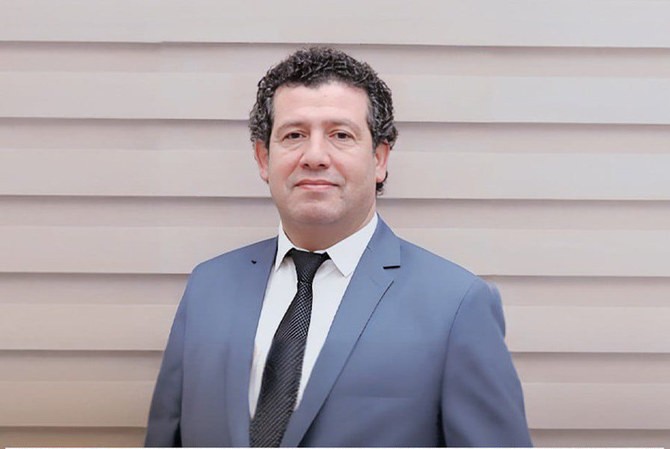
Adnan Ahmad Atieh Al-Bursh
Dr. Adnan al-Bursh (‘Adnān al-Bursh) (عدنان أحمد البرش) was a celebrated Palestinian orthopedic surgeon, head of the orthopedics department at al-Shifa Medical Complex, and medical advisor to the Palestinian Football Association.
Dr. al-Bursh was more than a physician; he was a symbol of resilience, integrity, and devotion to the Palestinian people, and dedicated his life to alleviating their suffering.
Born in Jabalya in northern Gaza on 17 September 1974, al-Bursh grew up during a period marked by the Israeli occupation and the First Intifada. His early life was shaped by violence and deprivation, but also determination. As a teenager, he sustained a fractured thigh bone during clashes with Israeli forces, an injury that kept him bedridden for three months. The experience profoundly influenced his choice of career: what began as a youthful ambition to study law and politics transformed into a calling for medicine. He would later return to political studies, but orthopedics became his professional and moral vocation.
Al-Bursh completed his secondary education at Halima al-Saadiya school in Gaza before traveling abroad for higher education. He obtained his medical degree from the University of Iași in Romania, later specializing in orthopedic and joint surgery. He earned the Jordanian Board in orthopedics, completed a fellowship in complex fractures at King’s College London, and joined the Palestinian Medical Board Committee. His expertise and skill made him one of the most accomplished surgeons in Palestine, admired for his technical excellence and for the compassion with which he treated his patients. At the same time, he pursued a master’s degree in political science at al-Azhar University in Gaza, reflecting his enduring interest in justice, governance, and the struggle of his people.
By 2010, al-Bursh had become head of the orthopedics department at al-Shifa Hospital Complex. He trained younger doctors, performed intricate surgeries, and managed some of Gaza’s most critical cases. He was described by colleagues as a “safety valve” for orthopedic care across the territory.
His commitment extended beyond the hospital. Dr. al-Bursh taught at the Islamic University of Gaza Faculty of Medicine, ran a private clinic, and worked with the Palestinian Football Association, serving athletes as both a physician and mentor. Despite opportunities to remain abroad, al-Bursh always returned to Gaza, explaining that “life is holy for us, we have another view on life.” His refusal to abandon his homeland reflected his conviction that every day of survival in Gaza was a blessing worth sharing with his community.
Outside of medicine, al-Bursh was a man of wide interests and simple pleasures. He loved swimming in the Mediterranean, often before dawn prayers, and was an avid photographer, documenting daily life with his camera. He enjoyed reading history, politics, and literature, and nurtured fruit trees in his garden. Above all, he was devoted to his family: his wife Yasmin and their children, Yazan, Yamen, and Tamim. Colleagues and relatives alike remembered him as gentle, generous, and cheerful, a man who never turned away a patient in need even when they could not afford care.
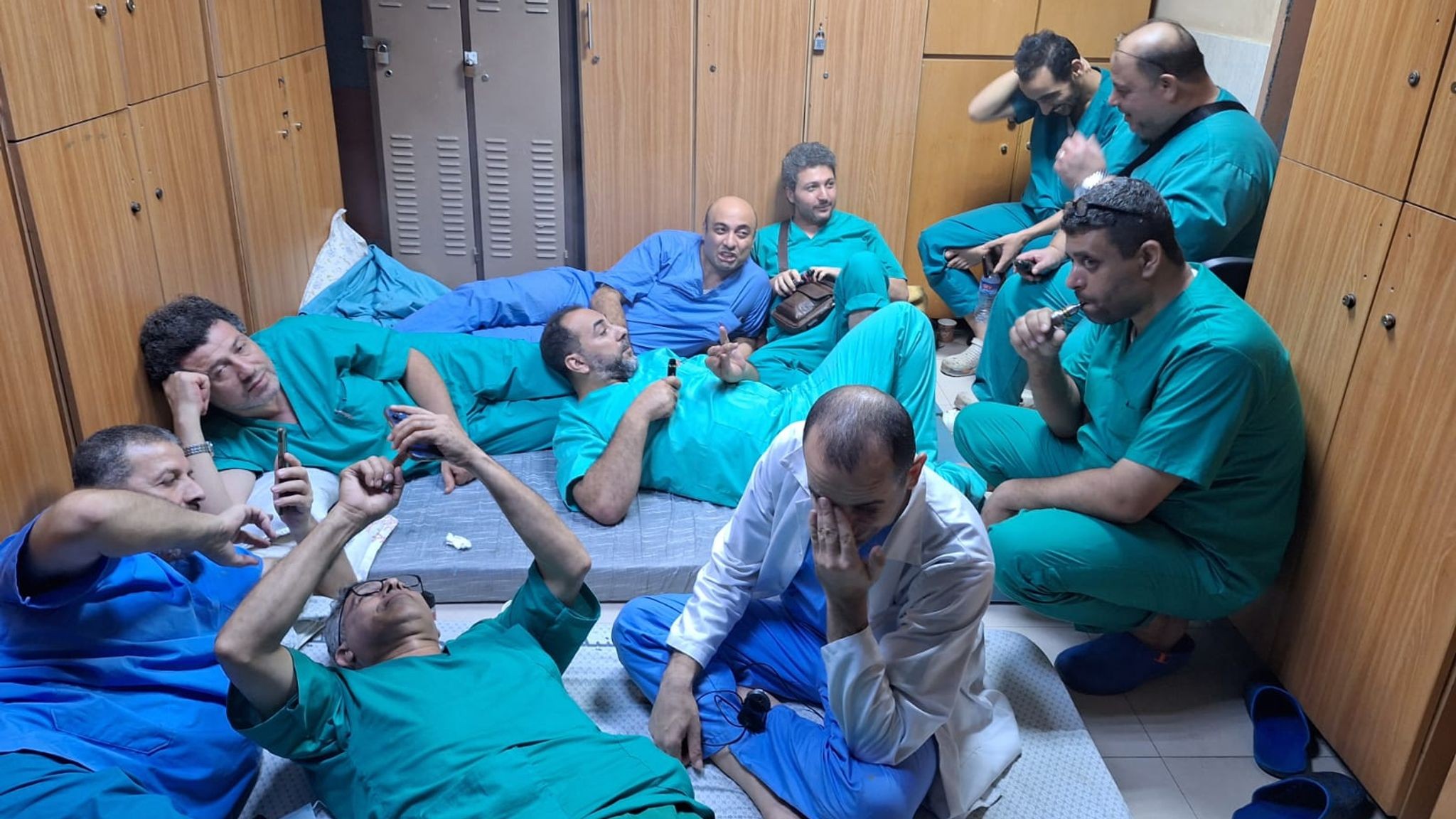
After the start of the genocide in October 2023, Al-Bursh moved into al-Shifa Hospital, often sleeping in the staff quarters, unwilling to leave patients unattended amid mass casualties. His medical service became inseparable from his resistance. When Israeli forces besieged al-Shifa, he relocated to other hospitals under attack, including the Indonesian Hospital and al-Awda Hospital, where he continued performing surgeries even under bombardment. A video circulated in November 2023 showed him soaked in blood from his own injuries while still operating on a patient during an airstrike.
His refusal to abandon Gaza’s hospitals placed him in direct danger. On 18 December 2023, Israeli forces raided al-Awda Hospital. Witnesses reported that male staff were ordered into the courtyard in their underwear, among them Dr. al-Bursh, who was then arrested. He was transferred first to the notorious Sde Teiman detention camp, where former detainees later recounted that he had been beaten, left unable to stand, and likely suffered broken ribs. In April 2024, he was moved to Ofer Prison near Jerusalem. There, only days after his arrival, he died under circumstances widely believed to involve torture and mistreatment. His body remains withheld by Israeli authorities, a continued source of anguish for his family.
His death provoked condemnation from Palestinian institutions, human rights organizations, and United Nations officials. The Palestinian Prisoners’ Affairs Commission described it as part of a systematic targeting of doctors in Gaza. Francesca Albanese, UN Special Rapporteur on human rights in the occupied Palestinian territories, described him as “a stellar surgeon, the embodiment of Palestinian ethics. Likely raped to death.” Tlaleng Mofokeng, UN Special Rapporteur on the Right to Health, declared herself horrified, emphasizing that he died because he sought to protect the rights to life and health of his patients. For many Palestinians, al-Bursh’s death symbolized the broader assault on Gaza’s healthcare system: by May 2024, nearly 500 medical workers had been killed.
Yet Dr. al-Bursh’s legacy is not defined solely by the brutality of his final months, but also by decades of healing and teaching. Former patients recalled his kindness and his refusal to take money from the poor. Relatives remembered his laughter, his swimming rituals, and his insistence on spending time with his children despite the demands of his profession. His nephew, who swam with him every morning before the war, called him an “athletic, gentle, and first-rate scholar.” His colleagues mourned not only the loss of a surgeon but of a mentor who had built Gaza’s orthopedic services into a lifeline for countless families.
In the words he once lived by: those who do not climb mountains remain in holes. Dr. Adnan al-Bursh spent his life climbing—and in doing so, lifted others with him.
Photo credits: Skynews