
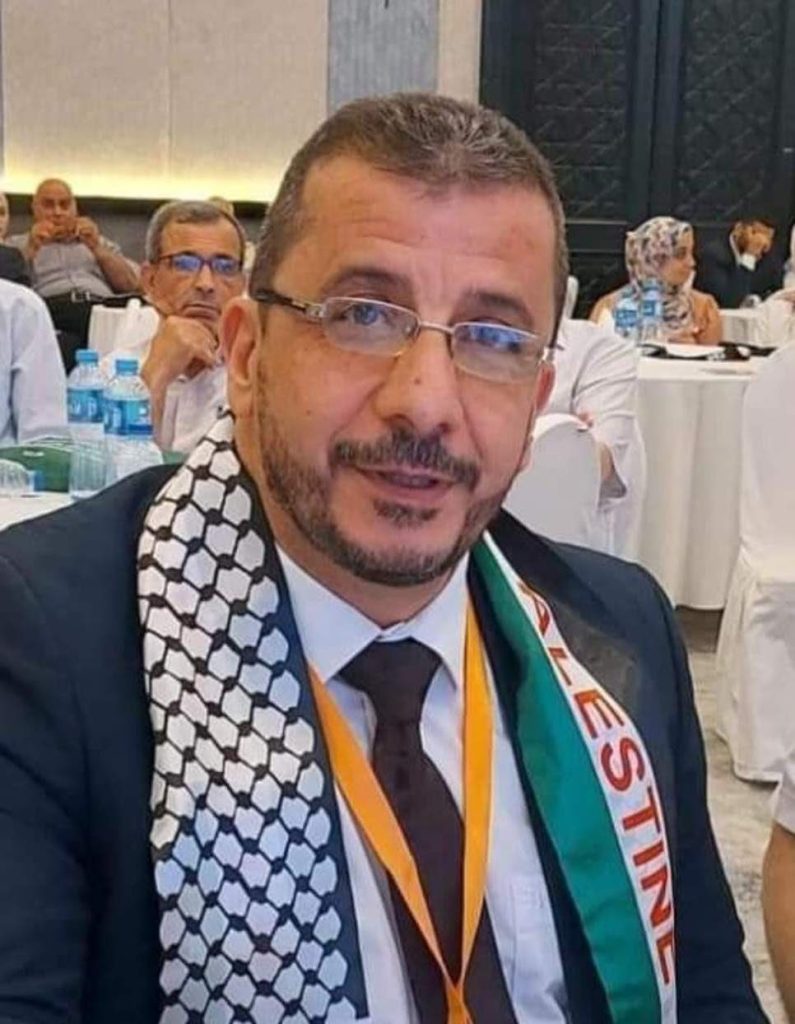
Rafat Hasan Abdel Rahman Lubbad
Rafat Lubbad (Ra’fat Labad) (رأفت حسن عبد الرحمن لبد) was a 52-year-old physician of uncommon energy and dedication, and a key figure in the development of Gaza’s health infrastructure. “He was a titan of internal medicine,” recalled Canadian emergency physician Tarek Loubani, “A visionary who patiently corrected me in matters of medicine in the ER & strategy outside of it.”
Dr. Lubbad was on the Faculty of Medicine at the Islamic University of Gaza, served as the Head of Internal Medicine at al-Shifa Hospital complex as well as the Indonesian Hospital.
Born in September 1971, Dr. Lubbad completed his medical education at al-Arab Medical University in Benghazi, Libya (now the Faculty of Medicine at the University of Benghazi). He worked at Althoura Hospital in Albaida City before moving back to Gaza, where he became a key node in the collective effort to build up the health sector in the face of its strangulation by Israel’s blockade, imposed since 2007.
In 2018, he became Director of the Qatari-funded Shaykh Hamad Hospital, a 100-bed facility that was Gaza’s only prosthetics and rehabilitation hospital. The hospital was part of an expansion in Gaza’s health sector, funded from abroad. A Reuters investigation found that by 2022, Gaza had 3,412 hospital beds, almost a 70% increase from 2009.
Israel attacked Hamad Hospital in its assault of May 2021.
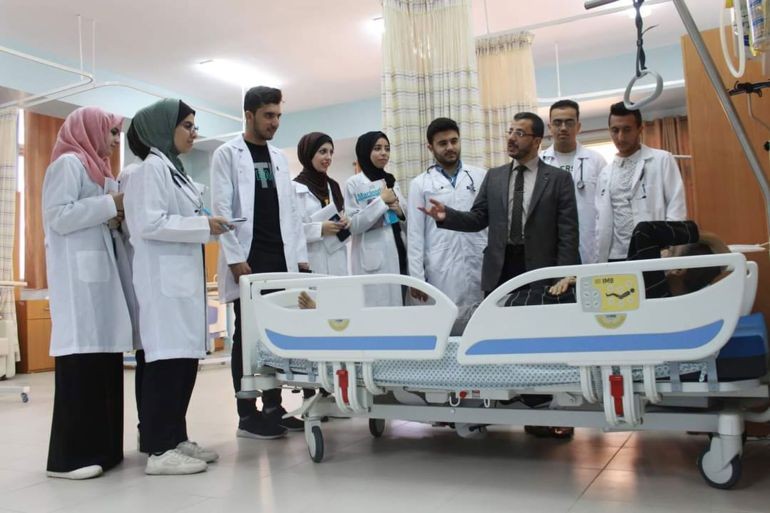
Dr. Lubbad opened Hamad hospital’s doors to medical students from al-Azhar University for clinical teaching, arguing that it was not only the students who would benefit. “The medical staff will develop their skills as well, for in teaching students, doctors review their information and stay up-to-date on trends in research.”
Dr. Lubbad maintained this balance between teaching and research in his own practice. In Libya and Gaza, he co-authored clinical studies on infection risk among health care providers, the growing problem of resistance to antibiotics, and took part in a special issue of The Lancet featuring research from Occupied Palestine.
Like all medical leaders in Gaza, Dr. Lubbad was compelled to navigate its highly fragmented health sector. According to a study by sociologist Mona Jebril, the sector was a “field of unregulated power relations” with severe coordination vacuums between its multiple parties—two Palestinian Ministries of Health in Gaza and the West Bank; UNRWA; foreign donors and NGOs; and Israel.
To wit, Dr. Lubbad devoted time to meeting municipal government officials; conducting public outreach during the early days of the Covid pandemic; concluding agreements with Health Ministry officials; and hosting visiting foreign doctors.
On 18 November 2023, three consecutive missiles struck the Lubbad family home in al-Shaykh Radwan, killing Dr. Lubbad, his brother, and several of their children. Israel blocked ambulances from reaching the area. Dr. Lubbad’s body was retrieved and buried seven months after his killing.
A former student grieved Dr. Lubbad’s death, as did cardiologist Muhammad Siyab Panhwar, who wrote: “Not only was he an excellent doctor, he was also a program director involved in medical education. What that means is that he was involved in training the next generation of doctors in Gaza. His loss alone is a terrible tragedy, but it is compounded by the fact that an entire generation of doctors may not get trained. Please honor his memory and remember his name.”
Photo Credits: X; Dunya al-Watan